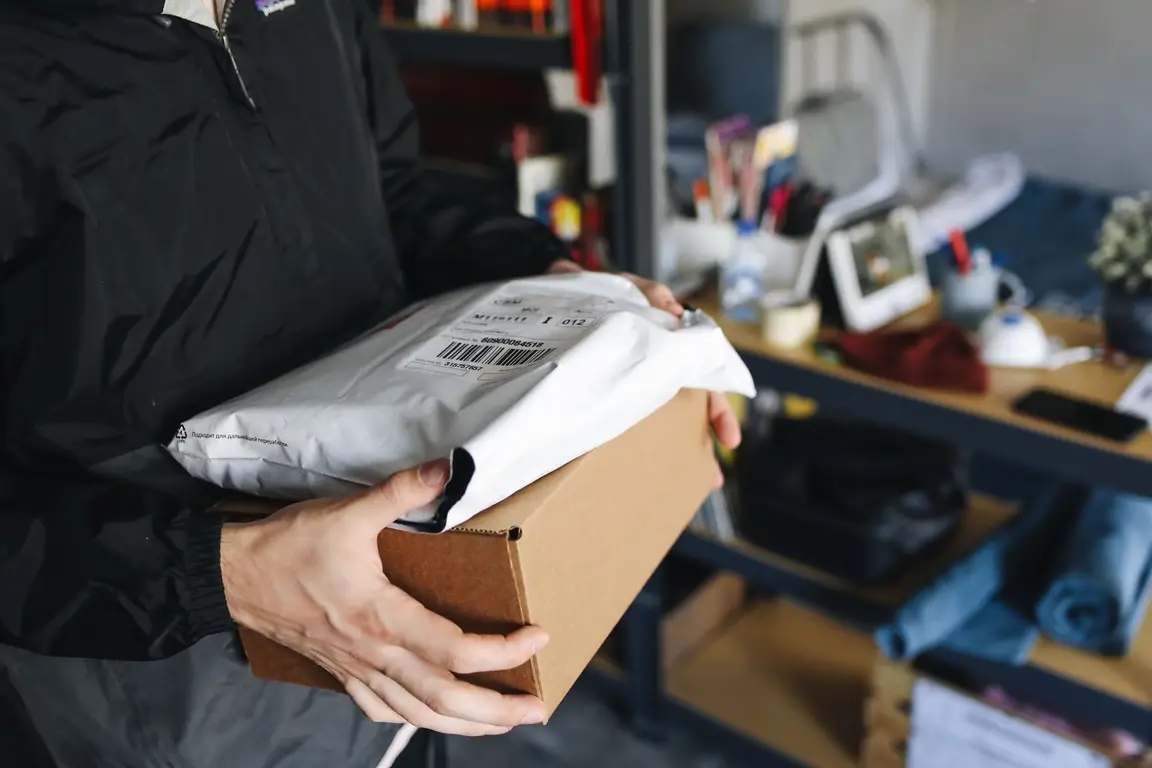

You ordered something. You got the “delivered” notification. You walked to your door, and nothing was there. Then you spotted the line buried in your lease: $17 a month for a company called Fetch you don’t remember signing up for.
So you searched it, and you got two answers, both useless. Fetch’s own site calls it a “premium amenity.” Half the internet calls it a scam. Neither one tells you what you actually need to know.
Which is where I come in. I’m an apartment locator here in Austin, and I know what more than 1,000 communities in this city actually charge you every month. I’ve watched Fetch spread through this market for years. And Fetch is an Austin company, so renters here run into it more than almost anyone in the country.
So, the straight version. Fetch isn’t a premium amenity, and it isn’t quite a scam. It’s a junk fee that’s almost always mandatory, and once you’ve signed, you’re not getting out of it. Meaning the opt-out fight most renters want to pick is the one they’re going to lose. The move that works comes earlier. Before you ever sign. And most people never hear about it until they’re already stuck.
What Fetch Actually Is
Fetch is a company that handles package delivery. Your apartment’s management signs a contract with them, and from that point on, every package headed to your building gets rerouted. Instead of UPS, FedEx, or Amazon dropping a box at your door or in a package room, they drop it at a Fetch warehouse across town. Fetch holds it, then brings it to you later on a schedule you pick in their app.
That’s the whole pitch. Your packages arrive at your door at a time you choose, and the property stops dealing with an overflowing package room.
Now, the part that matters for the fee question. This is a deal between two parties, Fetch and your property management company, and you’re not one of them. You never see the terms of that contract. What you get is a line item on your lease and an email telling you to download an app. Because it’s baked into the lease as a service the whole community uses, it’s not something you add or drop like Netflix. It’s a contract term. That single fact is why opting out is so hard, and I’ll get to exactly how hard in a minute.
One more thing worth saying plainly. In most cases, Fetch replaces whatever the building used before. Some communities tear out their package lockers or shut down the package room once Fetch moves in. So this often isn’t an extra option on top of what you had. It’s the only way packages reach you now.
And it may not stop at packages. Fetch rebranded in April 2026, and it’s not just boxes anymore. They’re moving into valet trash, storage, and grocery delivery too. Same company, more charges. Something to watch if your building already uses them.
How Fetch Works, Step by Step
Four steps, straight from Fetch’s own site:
- You get a Fetch address. After you sign, Fetch emails you a registration link and a new shipping address. It’s their warehouse, with a code tied to you. You use that address for online orders from then on.
- Your package lands at the warehouse. Carriers deliver to Fetch, not your apartment. You get an app notification when it arrives.
- You schedule a window. In the app, you pick a day and time slot. Same day in some cases, or a later day if you’d rather.
- A Fetch courier brings it over. They deliver to your door during the window you chose.
When it works, it’s convenient. Especially if you’re never home during normal delivery hours.
When it doesn’t, you’re chasing a box through an app.
And not everything moves through Fetch cleanly. Plenty of deliveries fall outside what it reliably handles, which means you end up juggling more than one shipping address.
| What you ship | Goes through Fetch? | What to do instead |
|---|---|---|
| Regular packages (Amazon, most retail) | Yes, that’s the whole point | Use your Fetch address |
| Groceries and anything that spoils | Often no, it can’t sit at a warehouse | Ship straight to the apartment or use store delivery |
| Anything needing a signature | Usually a headache (reschedules, missed deliveries) | Check with Fetch before you order |
| Big or heavy items | Often too big for their limits | Have the carrier bring it straight to you |
| USPS letter mail | No, that’s your mailbox, not Fetch | Nothing changes |
So Fetch handles your everyday boxes. For anything cold, heavy, or signature bound, you’re still working out another way to get it. Know that before you assume Fetch covers everything.
What Fetch Costs at Austin Apartments
Expect $15 to $20 a month, tacked onto your rent. When a Denver TV station looked into it, residents were paying a mandatory $17 a month with no way to opt out. Over a year, that’s $180 to $240 for a service you didn’t choose.
Seventeen bucks a month sounds small. So why do I tell people never to look at it by itself?
Because Fetch is rarely the only mandatory fee stacked on top of your rent. Valet trash runs $25 to $45. Pest control is another $5 to $15. Water and sewer, split across all the units, often adds $40 to $70. Covered parking can be $50 to $100. None of that shows up in the advertised price, the number you see when you browse Austin rentals on Zillow or a property’s own site.
And that’s the real problem with Fetch. Not the $17. It’s one more charge in a pattern most renters never add up until after they’ve signed.
| What you’re paying for | Monthly | Notes |
|---|---|---|
| Advertised rent | $1,400 | The number you saw online |
| Valet trash | $35 | Mandatory at most places |
| Pest control | $8 | Mandatory at most places |
| Water and sewer | $55 | Split across the units |
| Fetch package fee | $17 | Where Fetch is in place |
| What you actually pay | $1,515 | 8% over the sticker price |
Add covered parking and a pet, and that $1,400 unit lands north of $1,600 a month. Net effective rent is the number that matters here. That’s what you really pay each month once you add up every recurring charge and subtract any free rent they threw in. Fetch belongs in that math. So does everything else on the list.
None of this is just a renter gripe anymore. In December 2025, the FTC and the State of Colorado settled with Greystar, the largest apartment manager in the country, over advertising rents that left out mandatory monthly fees. Greystar paid $23 million and agreed to change how it advertises them. In March 2026, the FTC started writing rules to stop the same thing across the whole industry. Fetch is one small piece of a much bigger fee problem.
What I tell clients: don’t fixate on the $17 by itself. Price the whole stack into your comparison. A place listing $1,380 with five mandatory fees can easily cost more per month than one at $1,425 with none.
The sticker price lies. The stack tells the truth.
Can You Opt Out? The Honest Answer
If Fetch is written into a lease you’ve already signed, almost never. I wish I had better news, but I’d rather you hear it straight from me than waste a week arguing with a leasing office.
Go back to what Fetch actually is. It’s not an optional service you sign up for. It’s a contract for the whole community that your property already agreed to, and your lease ties you to it. When you sign, you agree to the fee. There’s no checkbox that turns it off later.
How much pull you’ve got depends entirely on when you’re asking. That’s the whole game:
| When you’re asking | How much pull you’ve got | What’s realistic |
|---|---|---|
| Before signing a new lease | A lot | Pick a community that doesn’t use Fetch. You haven’t agreed to anything yet. |
| At lease renewal | Some | You can ask, and renewal is the moment to push. Odds are low, but it’s the one point where they want to keep you. |
| Mid-lease, already signed | Almost none | Locked in until your lease ends. You can work around it, but you still pay. |
On the legal side: a lease is a contract like any other, and it can’t be changed in the middle of the term unless both sides agree. So a property usually can’t bolt Fetch onto your bill partway through. At renewal, though, you’re signing a brand new contract. If the fee is spelled out in it and you sign, it generally sticks in Texas. A landlord adding a package fee at renewal isn’t doing anything illegal, as long as it’s written down and they tell you ahead of time. That’s the general rule, but I’m a real estate agent, not an attorney, and your lease is its own document. For your actual rights, the Texas Attorney General’s renter pages and a tenant attorney beat anything I can tell you.
At renewal and you really don’t want Fetch? Timing matters. Many Austin leases require 60 days’ notice to move out, so raise it early, while the property still has a reason to negotiate to keep you. Ask if they’ll waive the fee, or let you skip the service. Some won’t budge. A few will, especially if the building still has working lockers. But go in expecting a no, and you won’t be blindsided.
And when a reporter asked Fetch directly whether residents can opt out, the company said it couldn’t speak for what individual complexes require. So the opt-out call sits with your property, not Fetch.
If you haven’t signed yet, you have the one thing renters who already did would kill for. A choice. Want to skip this fight entirely? Call me at 512-320-4599 or text 512-865-4672 and I’ll point you toward communities that don’t bundle Fetch.
The Move That Actually Works: Choose the Community Before You Sign
Here’s what most renters don’t realize: the opt-out battle is the wrong battle.
By the time Fetch shows up on your lease, it’s too late to push back. You’re negotiating from inside a contract the property already wrote. But before you sign? You’ve got all the pull in the world. You can pick a community that doesn’t use Fetch, or decide it’s worth it and sign anyway, knowing exactly what you’re paying for. Either way, it’s your call instead of a surprise.
That’s the difference between fighting to get out and choosing not to get in. One of them works.
You can’t tell any of this from a listing, though. Zillow and Apartments.com show you the unit, the photos, and the advertised rent. They don’t show you the package fee buried in the lease, the valet trash charge, or whether the building ripped out its lockers when Fetch moved in. You find all that out after you’ve toured, applied, paid the application fee, and sat down to sign. (I’ve watched clients learn about it at the signing table. Not a fun conversation.) That’s by design. The sticker price is the hook.
Closing that gap is my whole job. I keep community by community breakdowns of what Austin properties actually charge. So I know which ones bundle Fetch, which still run their own package room or lockers, and which let carriers deliver to your door. Tell me a $17 monthly fee is a dealbreaker, and I’ll route you around it before you waste an application fee finding out the hard way. It’s the part of the search a listing map can’t do for you.
Let me be honest about my limits, though. Once you’ve signed a lease with Fetch baked in, I can’t make it disappear. Nobody can. Not me, not a tenant attorney, not a strongly worded email. I’m not going to undo a contract. What I can do is make sure you see the fee before you commit, so the decision is yours. Already locked in? Skip down to the alternatives. Still looking? This is the part where I earn my keep.
And the cost to you? Nothing. The community pays me a referral fee from their marketing budget, the same budget they’d spend on a Zillow ad. Your rent is the same whether you use me or apply on your own.
If You’re Already Stuck With Fetch: Real Alternatives
Already signed? The fee stays. But you don’t have to live with the service, and here’s how to route around it. Fair warning: every one of these costs something, and none of them gets your $17 back.
| Workaround | What it costs | What it fixes | What it doesn’t |
|---|---|---|---|
| UPS Store or private mailbox | About $10 to $30/month | A real street address Fetch never touches, and you control pickup | Another monthly bill, and you drive to get your stuff |
| Mail forwarding address | Varies | Gets your orders out of Fetch’s hands entirely | Setup hassle, and some stores won’t ship to a forwarding address |
| Amazon Locker or Amazon Hub | Free | Handles your Amazon orders, skips Fetch completely | Amazon only, and you pick up at the locker |
| Ship to work | Free | Skips home delivery for anything work friendly | Only works if your job allows it |
| Carrier hold (FedEx or UPS hold at location) | Free | They hold your box at their store for pickup | You go get it, and not everything can be held |
The honest read: a UPS Store box is the cleanest fix, because it gives you an address Fetch never touches. But you’re paying twice. Once for Fetch you can’t drop, once for the box you actually use. Amazon Locker is the best free option if most of your orders come from Amazon anyway. For everything else, you’re stitching together a couple of these.
And if Fetch keeps losing your packages? Document everything. Dates, dollar amounts, screenshots of every “delivered” notification that wasn’t. If it keeps happening, bring it up at renewal, and file a complaint if your stuff is truly disappearing.
Is Fetch Actually That Bad?
The internet says yes. I’d push back a little.
Review sites are a complaint magnet. Happy customers rarely write paragraphs about a package showing up on time, so the picture online skews ugly. And for some renters, Fetch genuinely solves a problem. If you travel for work, pull odd hours, or live somewhere packages used to grow legs off the doorstep, scheduled door delivery on a window you pick is a real upgrade.
But the complaints aren’t nothing. Look at the BBB’s Austin page or the local news coverage and the same things come up over and over. Boxes lost or stuck at the warehouse for days. Deliveries that miss the window you picked. Warehouse hours that work for nobody. And a support setup that pushes you toward email and a web form, which is a rough place to be when your package has vanished.
A lot of it comes down to which warehouse serves your building and how well it’s run.
My take: Fetch is useful for a specific kind of renter and a forced cost for everyone else. Which is exactly why the choice should be yours, made before you sign, not discovered after.
Fetch Package: Common Questions From Austin Renters
Is Fetch mandatory at my apartment?
If your community uses Fetch and it’s in your lease, yes. It’s almost never optional. The property sends all packages through it, and they may have pulled out the old package room or lockers. Your only real way to avoid it is to live somewhere that doesn’t use it.
How much does Fetch cost per month?
Usually $15 to $20 a month, added right onto your rent. Over a year, that’s $180 to $240.
Can my landlord force me to use Fetch?
If the fee is spelled out in a lease you signed, it usually sticks in Texas. They can’t sneak it in partway through your lease without your say-so, but they can add it at renewal as long as they tell you ahead of time. This isn’t legal advice. For your situation, check the Texas Attorney General’s renter resources or talk to a tenant attorney.
Can I opt out of Fetch at lease renewal?
You can ask, and renewal is your best shot. It’s the one moment the property has a reason to keep you happy. Bring it up early, before your notice window closes. Many Austin leases require 60 days. Odds are still low, but a building that kept its lockers is more likely to flex.
What happens if I just don’t sign up for Fetch?
Your packages still go to the Fetch warehouse, but without an account you can’t schedule delivery, so they sit there. You’re still billed the fee, too, since it’s a lease charge and not a subscription. Not signing up doesn’t save you money. It just strands your boxes.
Will Fetch deliver groceries or anything that needs a signature?
Not reliably. Anything that spoils, anything big or heavy, and anything needing a signature tends to be a headache. For those, ship straight to your apartment or use the store’s own delivery.
Can I still get regular USPS mail with Fetch?
Yes. Fetch handles packages, not your mailbox. Letters and standard mail still go to your normal box like always.
What do I do if Fetch loses my package?
Reach out through the app, the web form, or help@fetchpackage.com, and write everything down. Order details, dates, dollar amounts, and the false “delivered” notification. If it keeps happening, that record is what you take to the leasing office, and to a consumer complaint if it comes to that.
How do I avoid Fetch when apartment hunting in Austin?
Check before you apply, not after. The fee won’t show on a listing, so ask the property directly or work with a locator who already knows which communities use it. Cleanest way to keep it off your lease in the first place.
Is Fetch a junk fee?
That’s what consumer advocates and now federal regulators call it. A fee you can’t say no to, that makes money for the property and its partner, and that plenty of residents get little out of. Whether it’s worth it to you depends on how much you value scheduled door delivery. But mandatory and non-negotiable is the part that earns the label.
Is Fetch only in Austin?
No. Fetch runs in more than 25 markets nationwide. But it’s headquartered in Austin, and it’s common here, so you’ll bump into it more than most.
What should I check before signing any Austin lease?
Ask for every mandatory monthly charge in writing, not just the rent. Package fee, valet trash, pest control, water billing, parking, pet rent. My guide for first time renters walks through the rest of what to look for.
Does using an apartment locator cost me anything?
No. My service is free to you. The community pays me a referral fee out of their marketing budget, and your rent is exactly the same whether you use me or apply on your own.
The Bottom Line
The fee isn’t the real story. The timing is.
Once Fetch is on a lease you’ve signed, you’ve got almost no room to move. The charge is locked in, and every workaround costs you something on top of it. You get one shot at this, and it comes early. Before you sign, when you still get to choose.
So if a $17 monthly package tax bugs you, don’t burn energy clawing your way out after the fact. Spend it up front. Know which Austin communities bundle Fetch and which don’t, price the full fee stack into every comparison, and decide with open eyes. That’s a fight you win, because it isn’t a fight at all. It’s just a choice you got to make on purpose.
Searching for an Austin apartment and want the real monthly cost, Fetch and valet trash and all of it, before you sign? That’s what I do, and it’s free. The community pays me, so your rent doesn’t change. Call 512-320-4599, text 512-865-4672, or get started here, and I’ll send you communities that fit your budget and your dealbreakers.
