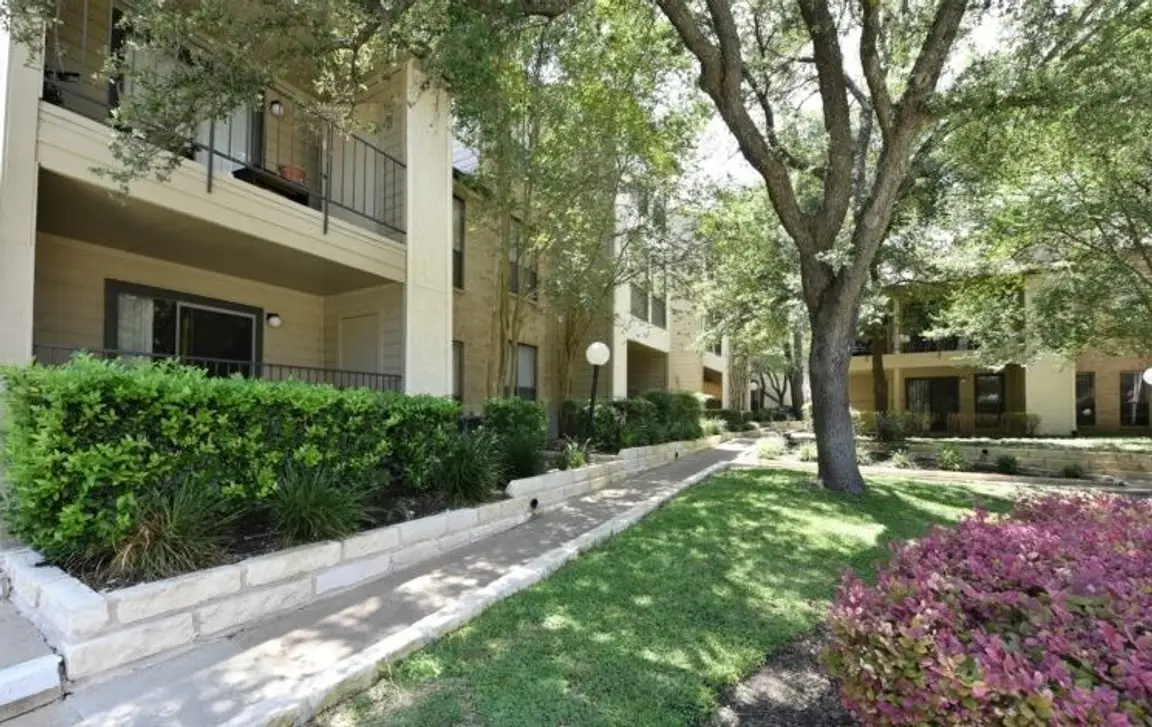

There are apartments in Austin renting for under $1,000/month spread throughout our city. Roughly 129 communities have starting prices below that mark as Spring 2026. Most are studios and 1-bedrooms at properties built between the 1970s and 1980s, concentrated in East Riverside, Wells Branch, Parker Lane, and North Austin. But the smarter move might be targeting newer apartments running concessions that net under $1,000/month after you do the math.
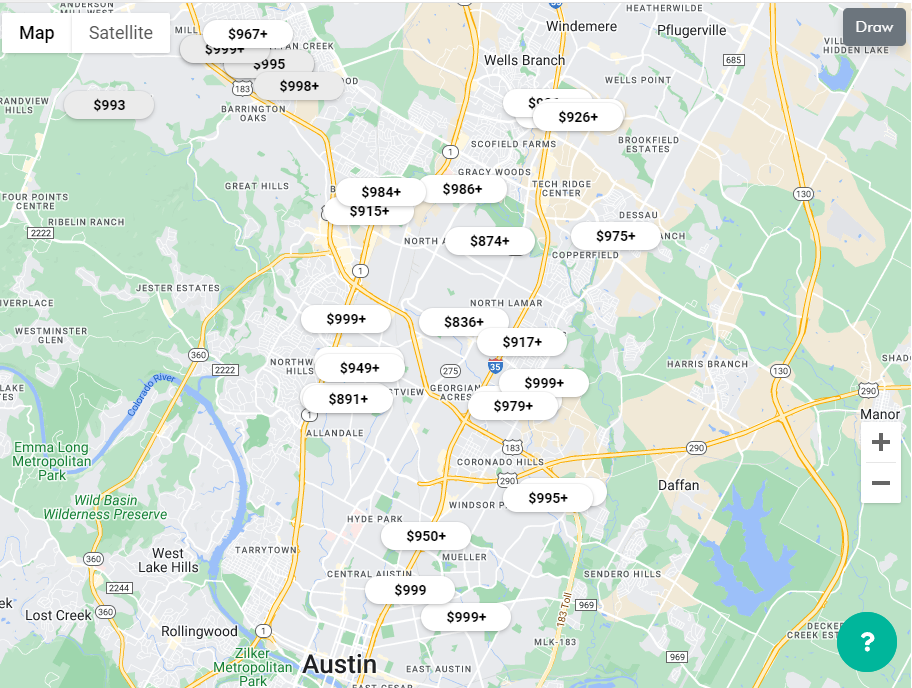
You Google “Austin apartments under $1,000” and get hit with Zillow showing 6,000+ results, Apartments.com claiming 3,700, ApartmentFinder listing 5,000. Sounds great. Until you realize those numbers are inflated. Listing sites count every floor plan variation as a separate “result,” not actual available units.
The real inventory is much smaller. And those listings don’t tell you which properties will actually approve your application, what the total move-in cost looks like, or whether that $899 face-value rent ends up costing more than a $1,300 apartment running 8 weeks free.
I track pricing, availability, and concessions across 1,000+ Austin apartment communities through ApartmentData.com and direct contact with property managers. That daily tracking is how I know the sub-$1,000 market right now is a mix of genuinely cheap older units and a smarter play most renters overlook: newer buildings where the concession math brings your actual monthly cost under or near $1,000.
Here’s what the listing sites won’t break down for you: where these apartments for rent in Austin actually are, what you’re giving up at this price, and why the sticker price might be the least important number in your search.
Where Sub-$1,000 Apartments Actually Cluster in Austin
Not all of Austin has sub-$1,000 inventory. It’s concentrated in specific corridors, and knowing which ones saves you from wasting time touring areas where nothing at this price exists.
Here’s where the inventory sits based on current data across Austin’s apartment market:
| Neighborhood/Area | Communities Under $1,000 | Typical Starting Price | Typical Year Built | Common Bed Types |
|---|---|---|---|---|
| East Riverside-Oltorf | 8 | $739–$985 | 1969–1973 | Studio, 1BR, 2BR |
| Wells Branch | 8 | $800–$990 | 1983–1986 | 1BR, 2BR |
| Parker Lane | 7 | $815–$975 | 1978–1986 | Studio, 1BR, 2BR |
| North Austin | 5 | $787–$990 | 1980–1984 | Studio, 1BR, 2BR |
| Cedar Park | 5 | $875–$995 | 1999–2019 | Studio, 1BR |
| Walnut Creek | 4 | $800–$950 | 1978–1984 | 1BR, 2BR |
| Anderson Mill | 4 | $850–$975 | 1983–1986 | 1BR, 2BR |
| St. Johns | 3 | $830–$970 | 1978–1984 | 1BR, 2BR |
| Windsor Park | 3 | $875–$985 | 1973–1984 | Studio, 1BR |
| Northeast Austin | 3 | $849–$980 | 1984–2001 | Studio, 1BR, 2BR |
A pattern jumps out. Most sub-$1,000 inventory sits along the I-35 corridor and north of the river. East Riverside has the highest concentration and also some of the oldest building stock in the city. Wells Branch offers a more suburban feel with similar pricing but slightly newer construction.
You won’t find much under $1,000 in South Congress, Zilker, Downtown, West Austin, or the Domain area. Those markets start at $1,400+ even for studios. If you need to be in those areas, skip to the concession math section below.
The south suburbs tell a different story. Cedar Park, Round Rock, Pflugerville, and Georgetown each have communities starting under $1,000, and some are newer construction (2019-2022 builds) that got aggressive with pricing to compete with the flood of new supply.
What $1,000/Month Actually Gets You in Austin
Let me be real about what you’re walking into. A sub-$1,000 apartment in Austin in 2026 looks different depending on whether you’re at a 1978 property or catching a deal at a 2020 build.
| Feature | Under $1,000 (Pre-1990 Build) | $1,000–$1,300 (Class B) | $1,200–$1,400 with Concessions (Class A/Newer) |
|---|---|---|---|
| Year Built | 1969–1986 | 1995–2015 | 2019–2024 |
| In-Unit Laundry | Rare (hookups sometimes) | Sometimes | Standard |
| Flooring | Carpet or old vinyl | Updated vinyl plank | Vinyl plank or hardwood-look |
| Kitchen | Basic/dated appliances | Updated appliances | Stainless steel, quartz counters |
| HVAC | Older units, higher bills | Moderate efficiency | High efficiency, lower bills |
| Gym | Small or none | Basic equipment | Full gym, sometimes yoga/spin studio |
| Pool | Maybe | Usually | Yes |
| Parking | Usually included | Sometimes extra $25–$75 | Often extra $50–$150 |
| Typical Sq Ft (1BR) | 500–750 | 650–850 | 650–900 |
| Monthly Utilities | $120–$180 | $90–$140 | $80–$120 |
At sub-$1,000 properties, you’re looking at buildings 35-50 years old. That means higher utility bills from poor insulation and aging HVAC systems. Shared laundry rooms with coin or card-operated machines. Maintenance response times that can drag because these properties operate on tighter margins.
These aren’t bad apartments, though. Many have been renovated with updated flooring, new countertops, and fresh paint. A 1984 property that just finished a renovation can feel perfectly fine inside. The age shows more in common areas, building envelope efficiency, and amenity quality than inside the unit itself.
Here’s a number worth paying attention to: if you’re paying $899/month but spending $50/month on coin laundry and $40/month more in electricity than you would at a newer building, your real cost is $989. Keep that math in mind. I broke down hidden renting costs in Austin separately if you want the full picture.
The Concession Math Most Renters Miss
This is the section that should reframe how you think about your budget.
Austin’s apartment market is sitting on a wave of new supply. Over 32,000 units were delivered in 2024 alone, and another 17,500 followed in 2025 (CoStar via Austin Business Journal). Vacancy hit 10.2% by Q3 2025 (Cushman & Wakefield), and CoStar tracked that 65% of Austin apartment complexes offered some form of concession in 2025. Among Class A properties specifically, 75% were running concessions (Austin Apartment Association).
So what does that mean for renters? Aggressive concessions at newer communities trying to fill units. We’re talking 6, 8, even 10+ weeks of free rent at properties listed at $1,200–$1,400/month.
When you spread that free rent across your lease, the monthly cost drops hard. Here’s what that looks like in practice:
| Community Price Tier | Base Rent | Concession | Lease Term | Net Effective Rent | Year Built |
|---|---|---|---|---|---|
| Newer Class A | $1,300 | 8 weeks free | 12 months | ~$1,004 | 2022 |
| Newer Class A | $1,200 | 6 weeks free | 12 months | ~$1,062 | 2020 |
| Newer Class A | $1,350 | 10 weeks free | 13 months | ~$1,088 | 2023 |
| Newer Class B | $1,150 | 6 weeks free | 12 months | ~$1,018 | 2019 |
| Older Class C | $899 | None | 12 months | $899 | 1978 |
| Older Class C | $950 | 1 month free | 12 months | ~$872 | 1984 |
Look at the $1,300 apartment with 8 weeks free. It pencils out to roughly $1,004/month. That’s only $105 more than the $899 unit with no concession, and you’re getting a building that’s 44 years newer with in-unit laundry, a real gym, and lower utility costs.
Want to run the numbers yourself? Use our net effective rent calculator. Here’s the formula behind it:
Net Effective Rent = Base Rent × [(Lease Days − Free Days) ÷ Lease Days]
Quick multipliers for common concession structures:
- 6 weeks free on a 12-month lease: Base Rent × 0.8849
- 8 weeks free on a 12-month lease: Base Rent × 0.8466
- 2 months free on a 12-month lease: Base Rent × 0.8356
Fair warning: most communities qualify you based on the base rent, not the net effective. So even if the net effective comes out to $1,004, you’ll need to show income at 3x the $1,300 base ($3,900/month). That’s a higher bar, and it prices out some renters. If you fall short, see our guide on apartments that don’t require 3x rent.
Want to know which newer communities are running the best concessions right now? Call me at 512-320-4599. I track these daily and they change fast. You can also check current Austin move-in specials on our site.
Income and Qualification Requirements at This Budget
Every apartment community requires proof of income. The standard is 3x the monthly rent in gross income. Here’s how that math breaks down at different rent levels in the sub-$1,000 range (run your own numbers with our 3x rent calculator):
| Monthly Rent | 3x Income (Standard) | 2.5x Income (w/ Guarantee) | Annual Salary Needed (3x) |
|---|---|---|---|
| $800 | $2,400/mo | $2,000/mo | $28,800 |
| $900 | $2,700/mo | $2,250/mo | $32,400 |
| $1,000 | $3,000/mo | $2,500/mo | $36,000 |
| $1,100 | $3,300/mo | $2,750/mo | $39,600 |
| $1,200 | $3,600/mo | $3,000/mo | $43,200 |
| $1,300 | $3,900/mo | $3,250/mo | $46,800 |
Don’t meet the 3x threshold? A third-party guarantee service can drop the requirement to 2.5x. These services act as an insurance policy for the property. If you default on rent, the guarantee company covers the community’s losses. Cost is typically around one month’s rent, paid either upfront or split over 5-6 months. Our eviction-friendly apartments guide breaks down how guarantees work in practice.
Credit score matters here too. Most sub-$1,000 properties want a minimum of 550-600. And here’s something that surprises people: some older Class C communities are actually stricter than newer buildings. They run tighter margins. One missed rent payment hits their bottom line harder than it would at a large, well-capitalized property. So they screen accordingly. More on that in our credit score guide for renters.
Senior communities (55+ age-qualified) sometimes require only 1x income, so a $900/month apartment could require just $900/month in provable income. That’s relevant for retirees on fixed income. These are a legally designated housing category, not a preference.
Not sure where you stand? Our how much rent can I afford page walks through the math based on your actual income. Screening criteria vary by property and management company. This information is for general guidance only.
Screening Challenges at Budget-Friendly Properties
Here’s something I tell clients all the time: cheaper apartments aren’t automatically easier to get into.
Most people assume a $900/month property will be more lenient on screening than a $1,600/month one. Sometimes the opposite is true. Older Class C properties — the ones dominating the sub-$1,000 market — are often managed by smaller companies with less infrastructure for case-by-case reviews. They lean on automated screening through RentGrow or LexisNexis. An eviction or broken lease hits an automatic decline. No human review.
Newer communities managed by larger companies (RPM Living, Greystar, NRP Group) tend to have more flexibility. They accept third-party guarantees, their on-site managers can approve borderline applications, and they’re motivated to fill units in a market where rents have dropped roughly 17% from 2022 peaks.
The bottom line on screening at this budget:
Broken lease under 2 years: Limited to 10-15% of the market. Third-party guarantee usually required. See our broken lease apartments page for which communities currently work with this.
Eviction on record: Most communities auto-decline. Options narrow to 15-20 properties with case-by-case review. Full breakdown at second chance apartments that accept evictions.
Credit under 580: Primarily second-chance properties and some Class C. Deposits run $800-$1,500. More at bad credit apartments in Austin.
Property debt (money owed to a previous landlord): This is the real blocker. 99% of communities decline applicants with active property debt regardless of everything else. Third-party guarantee is the only workaround.
Now, if you have 650+ credit and a clean rental history? You don’t need a locator for this price range. Filter Apartments.com by price, tour a few places, pick one. Where I add value is when your situation is more complicated and you need to know which communities will actually approve you before you burn $50-$75 on a non-refundable application fee.
Dealing with a broken lease or eviction? I know which of these 129 communities will work with your situation. Call me at 512-320-4599.
Austin Apartments Under $1,000 by Bedroom Count
Not every bedroom type exists at this price.
| Bedroom Type | Price Range Under $1,000 | Typical Sq Ft | # of Communities | Where to Look |
|---|---|---|---|---|
| Studio | $739–$990 | 400–550 | ~40 | East Riverside, North Austin, Parker Lane, Windsor Park |
| 1-Bedroom | $761–$999 | 500–750 | ~85 | Wells Branch, East Riverside, Parker Lane, Anderson Mill, Cedar Park |
| 2-Bedroom | $850–$999 | 750–950 | ~25 | Wells Branch, North Austin, Walnut Creek (mostly outer areas) |
| 3-Bedroom | Essentially unavailable | — | <5 | Scattered suburban locations only |
Studios are the easiest to find under $1,000. Pretty much every community in this price range offers them. One-bedrooms are the most common search at this budget, and they’re available, but inventory is tighter than listing sites suggest once you filter for actual available units rather than listed floor plans. For more on that, check cheap 1-bedrooms to rent in Austin.
Two-bedrooms under $1,000? Rare. You’ll find them at 1970s-1980s properties in Wells Branch, Walnut Creek, and outer North Austin. Expect 750-950 square feet and basic finishes.
Three-bedrooms under $1,000 essentially don’t exist within Austin city limits. If you need a 3BR at this budget, you’re looking at the south suburbs (Kyle, Buda, Hutto) or roommate situations splitting a larger unit.
Austin Apartments Under $1,000: Frequently Asked Questions
Can you find a 1-bedroom apartment in Austin for under $1,000?
Yes. Roughly 85 communities across Austin have 1-bedroom starting prices below $1,000. Most are in East Riverside-Oltorf, Wells Branch, Parker Lane, and North Austin, at properties built in the 1970s-1980s with 500-750 square feet. Newer options exist if you factor in concessions. A $1,200 1BR with 6 weeks free nets about $1,062/month.
What neighborhoods have the cheapest apartments in Austin?
East Riverside-Oltorf has the most sub-$1,000 inventory (8 communities), followed by Wells Branch (8) and Parker Lane (7). Georgian Acres and North Austin corridors along I-35 also have pockets of lower-priced rentals. CoStar estimates the average asking rent for the Austin metro in Q1 2026 at $1,525 (ABJ/CoStar), so sub-$1,000 units are well below the market average.
Are there any new apartments in Austin under $1,000?
Not at face value. New construction (2020+) starts at $1,100-$1,400 for a 1BR. But with current concessions (6-10 weeks free on 12-month leases), the net effective rent on some newer units drops to the $1,000-$1,100 range. That’s as close to “new and under $1,000” as Austin gets right now. RealPage data from August 2025 showed Austin leading the nation with 30.5% of units offering concessions at an average 12.9% discount (RealPage).
What credit score do I need for a $1,000/month apartment?
Most properties want 550-600 minimum. At 600+ credit, you’ll have access to about 70-80% of the sub-$1,000 market. Below 550, options narrow to second-chance properties and communities accepting third-party guarantees. Requirements vary by property and management company.
Can I get an apartment under $1,000 with a broken lease?
Yes, but your options shrink. A broken lease under 2 years old limits you to about 10-15% of the market. Over 2 years, closer to 40-50%. A third-party guarantee ($1,000-$1,500 upfront) opens more doors. The key factor is whether you have outstanding property debt. That matters more than the broken lease label itself.
How much income do I need for a $1,000 apartment in Austin?
Standard requirement: 3x rent = $3,000/month gross ($36,000/year). With a third-party guarantee, that drops to 2.5x ($2,500/month or $30,000/year). Some 55+ senior communities require as little as 1x the rent.
Are utilities included in Austin apartments under $1,000?
Rarely. Most sub-$1,000 apartments don’t include utilities. Budget $120-$180/month for electric, water, sewer, and trash at older properties. Newer buildings tend to run $80-$120 for the same services because of better insulation and more efficient HVAC. Some communities include water/trash in rent. Always ask before signing. Your electric provider within Austin city limits is Austin Energy; further north in Round Rock or Georgetown, you may be zoned for Pedernales Electric Co-op. Full breakdown in our apartment utility bills guide.
Is it worth using an apartment locator for budget apartments?
Depends on your situation. Clean credit (650+) and no rental history issues? You can handle this yourself through listing sites. But if you have screening challenges — broken lease, eviction, credit under 600, or property debt — a locator knows which of those 129 sub-$1,000 communities will actually approve you. The service is free to renters. The apartment community pays from their marketing budget.
What’s the cheapest area to rent in Austin right now?
East Riverside-Oltorf and Georgian Acres consistently have the lowest rents in Austin proper. Outside city limits, Kyle and Manor tend to run cheaper. Within Austin, Parker Lane and Wells Branch offer sub-$1,000 options with better access to employment centers than far-east or far-south locations. CapMetro bus routes serve most of these corridors if you’re commuting without a car.
Can I get in-unit laundry for under $1,000/month in Austin?
At face-value rent? Tough. Most sub-$1,000 apartments are older buildings with shared laundry rooms. Some offer washer/dryer hookups (you supply the machines) in larger units. Your best bet for in-unit laundry near this budget: target newer apartments running concessions that net in the $1,000-$1,100 range. Almost all 2019+ builds include washer/dryer in-unit.
How do concessions affect the actual rent I pay?
Concessions like “6 weeks free rent” spread the discount across your lease term. A $1,200/month apartment with 6 weeks free on a 12-month lease nets about $1,062/month. You’re paying $1,200 for 10.5 months and $0 for 1.5 months. The landlord front-loads the discount. Your lease shows the base rent, and income qualification is based on that base number. Use our net effective rent calculator to run the exact math.
Are there apartments under $1,000 near downtown Austin?
At base rent? A handful. Mostly studios in older properties along East Riverside or Parker Lane, technically within a few miles of downtown. Downtown proper (78701) doesn’t have sub-$1,000 options. Your closest bet is East 6th Street and the Riverside corridor, where studios at 1970s-era properties start at $739-$900. That’s a 10-15 minute drive or CapMetro bus ride to downtown.
What if I need help with affordability beyond market-rate apartments?
If your household income qualifies, the City of Austin’s SMART Housing program sets aside units at reduced rents in certain communities. We maintain a list of income-based apartments with no waiting list that’s worth checking. The City of Austin Housing and Planning Department also maintains resources for renters seeking subsidized options.
The Bottom Line on Sub-$1,000 Apartments in Austin
The inventory exists. 129 communities with starting prices under $1,000 across the Austin metro. But the smarter approach in this market is thinking about total monthly cost, not just the number on a listing page.
A $900 apartment at a 1978 property with coin laundry and high electric bills might cost you $989/month all-in. A $1,200 apartment at a 2022 build running 8 weeks free nets $1,004 with in-unit washer/dryer and lower utility bills baked in. Which one is actually cheaper?
Three variables determine your best option: how flexible you are on location, how old a building you’re willing to live in, and whether you have any screening issues that narrow your options. The current market favors renters. But deliveries are projected to drop to around 4,600 units in 2026 (CoStar), so this concession window won’t stay open forever. Rent growth isn’t expected to return until early 2027, but the best deals are getting snapped up now as the market slowly rebalances.
Looking for an apartment under $1,000 in Austin? I’ll match you with communities that fit your budget, timeline, and situation, including ones running concessions that bring newer apartments into your price range. My service is free — the apartment community pays me from their marketing budget. Call or text me at 512-320-4599, or get started here.
